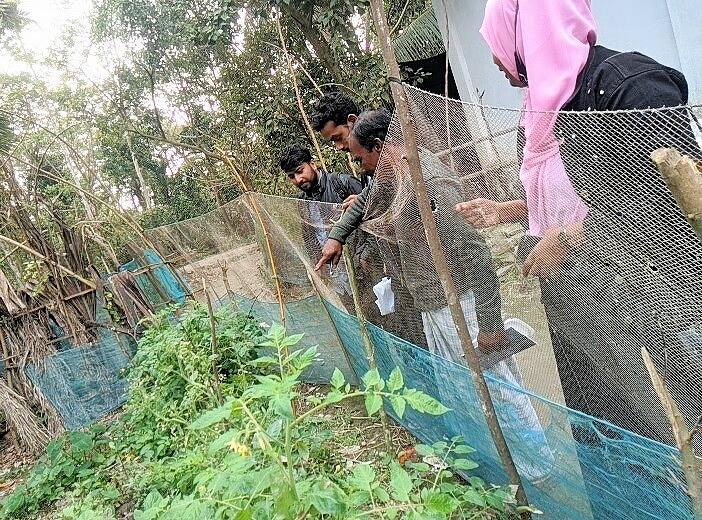

Where it is realized
Summary description of agroecological practice
The practice I want to map is an integrated approach to farming that emphasizes ecological principles and biodiversity conservation to enhance resilience against climate change and promote sustainable food production.
Type of agroecological practice
The agroecological practice I want to map is a holistic approach that combines diversified cropping systems, organic fertilization, water management techniques, and youth-led initiatives to create a resilient and sustainable farming ecosystem.
Implementing the practice
To prepare and implement our Climate-Resilient Agroecology Farm, we undertake the following steps:
1. **Assessment and Planning**: We conduct a thorough assessment of local environmental conditions, including soil quality, water availability, and climate patterns. This assessment informs the development of a detailed farm plan, outlining our objectives, strategies, and timelines.
2. **Crop Diversification**: We diversify our crop selection to minimize risks associated with climate variability and pests. This involves planting a variety of crops with different growth habits, maturity times, and tolerance to environmental stressors. Companion planting and crop rotation are also employed to enhance soil health and pest management.
3. **Organic Fertilization**: We prioritize the use of organic fertilizers such as compost, manure, and cover crops to improve soil fertility and structure. These organic inputs promote nutrient cycling, enhance soil microbial activity, and reduce reliance on synthetic chemicals.
4. **Water Management**: We implement water-saving techniques such as drip irrigation, mulching, and rainwater harvesting to optimize water use efficiency and mitigate the impacts of drought and flooding. By conserving water resources, we ensure sustainable agricultural production even in water-stressed environments.
5. **Youth Engagement and Training**: We actively involve youth from the local community in all aspects of farm management. Through structured training programs and hands-on experiences, we empower young farmers with the knowledge and skills needed to practice agroecology effectively. This includes training on ecological principles, sustainable farming techniques, and biodiversity conservation.
6. **Monitoring and Adaptation**: We regularly monitor the performance of our agroecological practices and make adjustments as needed based on feedback from the land, crops, and community. This adaptive approach allows us to continuously improve and refine our farming methods in response to changing environmental conditions and emerging challenges.
By following these steps and embracing the principles of agroecology, we create a resilient and sustainable farming ecosystem that fosters biodiversity, enhances soil health, conserves water, and supports the livelihoods of local communities.