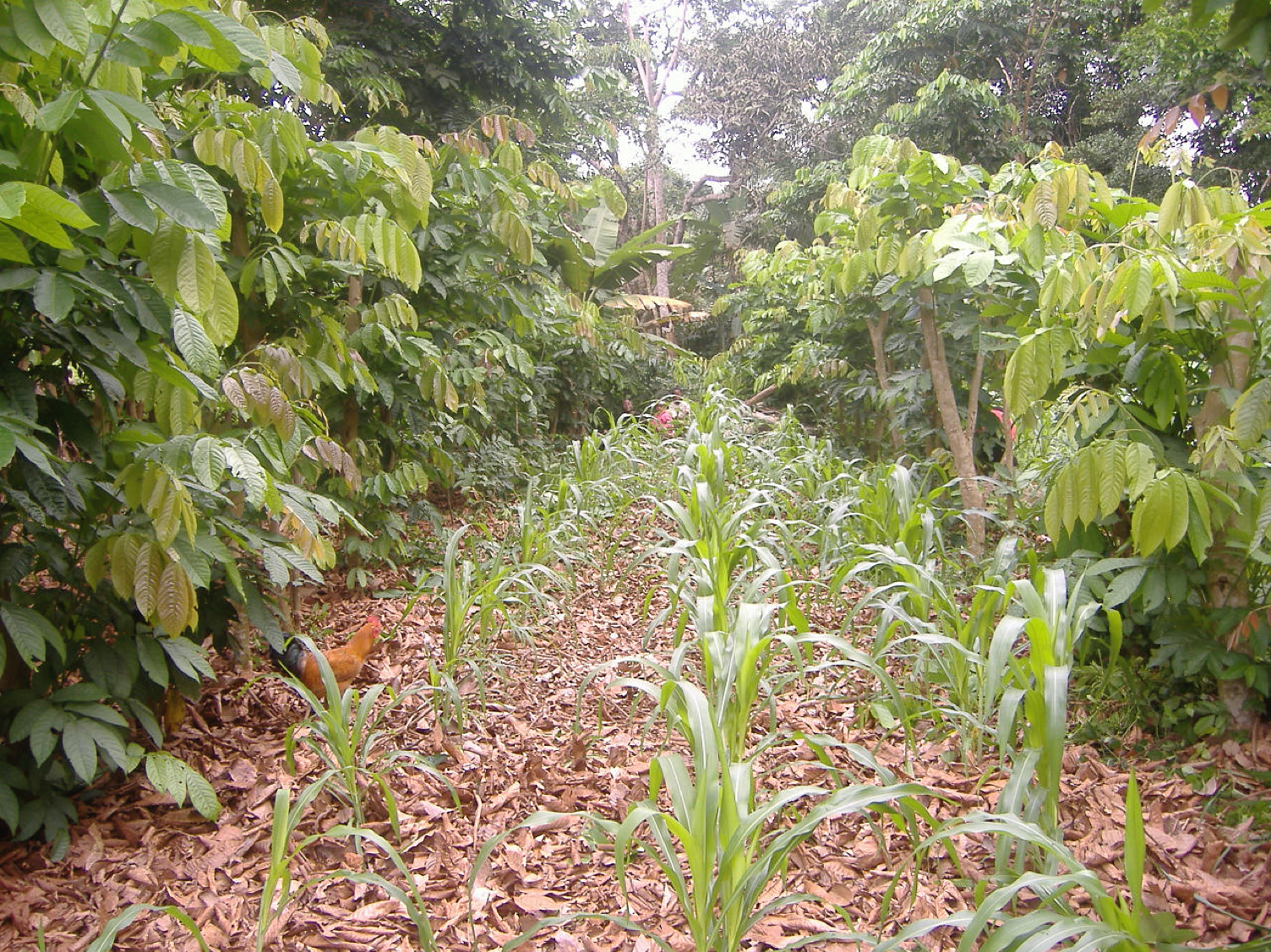

General performance
Details
Yield increases are spectacular, and quality of produce greatly improved - so livelihoods enhanced.
Unintended positive side effects of practice
Details
Unexpected protection of cacao from pod rot
Unintended negative side effect of practice
Knowledge and skills required for practice
Details
This is not a complicated system, but it requires a change of mentality to learn that agriculure can work with trees, rather than in cleared land.
Labour required for practice
Details
The first 1-2 years till first tree pruning require weed control, but thereafter v little weed control, no spraying, so definitely REDUCED labour requirement.
Cost associated with practice
Details
The only inputs needed are Inga seeds and a machete.
Does it work in degraded environments?
Details
Inga alley cropping provides excellent remediation for depleted and compacted soils IN WET TROPICAL AREAS.
Does it help restore land?
Details
As soon as the trees start growing the soil becomes more friable; the system builds organic matter and rich living soil on previously depleted and compacted areas. The rees fix nitrogen and the system holds phosphorus (via Mycorrhizal activity)
Climate change vulnerability effects
Details
The mulch in Inga alleys holds moisture and the alleys even after pruning protect the soil from direct sun, so the system provides resilience to drought
Time requirements
Details
Where no crop is grown until the first pruning of the trees, this looks like a slow system - it requires a plot to be out of production for that time (18-24 months); but frequently that land will have been unproductive (and beyond redemption with chemicals), and to go from nothing to a crop in 2 years is quite rapid.