
Where it is realized
Summary description of agroecological practice
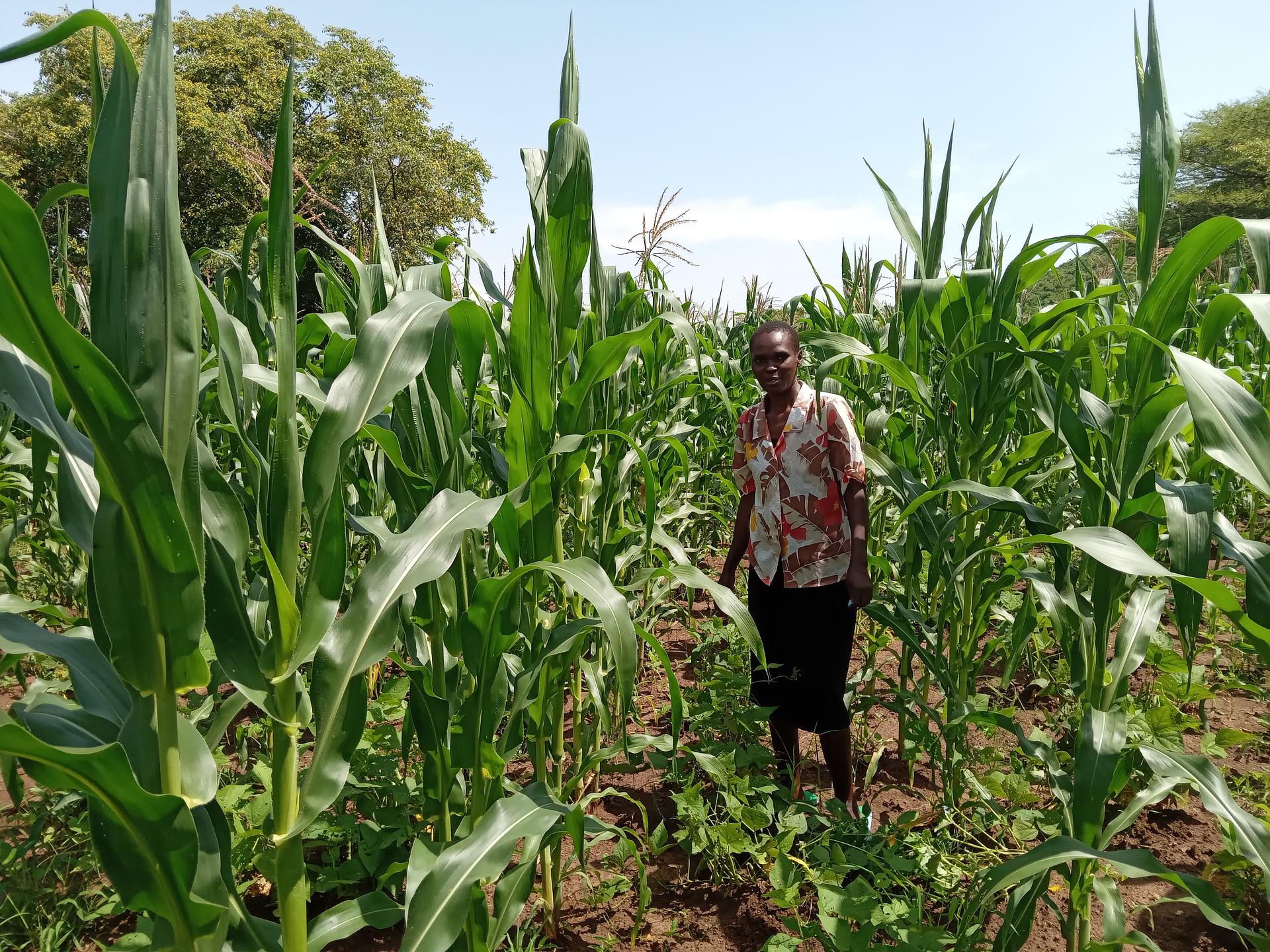
Intercropping maize and legumes (beans, groundnuts) to enhance soil biodiversity
Type of agroecological practice
1. Intercropping with cover crops
2. Crop rotation
3. soil erosion control
4. Recycling of crop residues as manure
Implementing the practice
I plant the main crop which is maize and intercrop it with legumes like beans and groundnuts on the same farm. The legumes cover the land hence it it is less exposed and this reduces the growth of weeds on the farm.
Run offs and soil erosion is also reduced during rainy seasons
The crop residues after harvesting also act as manure and improves soil fertility
In the next seasons I alternate a different crop on the farm before planting maize again
Why you use and what you expect from this practice?
1. Companion cropping is cost effective
2. Sometimes if there is less harvest of the main crop, the inter crop becomes the savior.
3. Soil health is improved
I expect to get bounty harvests of more multiple crops from the same farm
Land size
Substitution of less ecological alternative
Details
The legumes cover the land hence it it is less exposed and this reduces the growth of weeds on the farm hence production is increased. There is less costs on weeding.