
Where it is realized
Summary description of agroecological practice
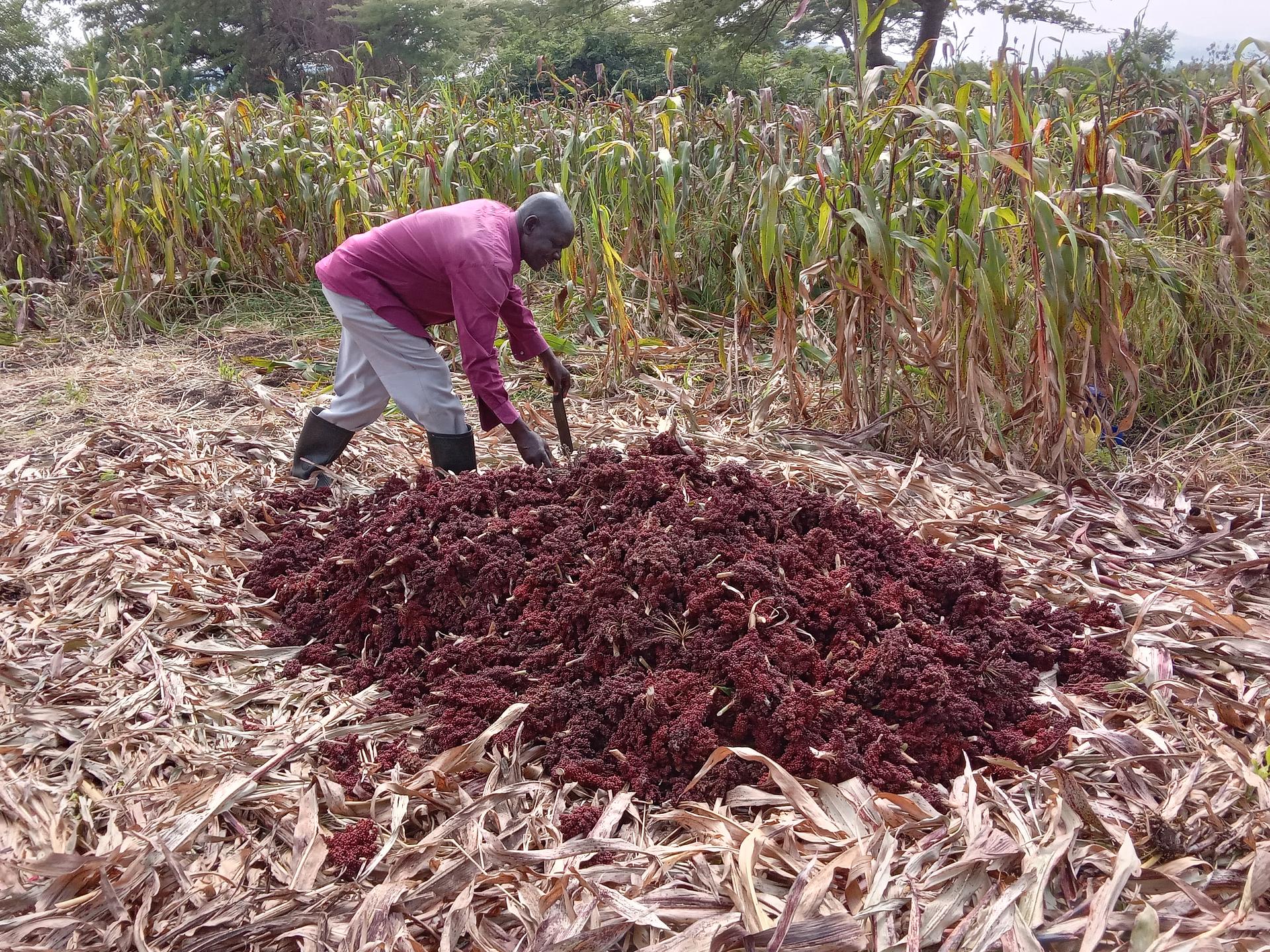
Sorghum production on enhancing food security
Type of agroecological practice
Crop-livestock integration
Cereal- legume intercropping
Cultural and mechanical weeding
Implementing the practice
The compost from animal waste is used during the planting season which in turn result to an increased production of sorghum. Some of the crop residues are kept for livestock feed while others are left in the farm to decompose and increase the soils fertility.
Legumes like beans are planted alongside sorghum. they have increase the nitrogen intake in the soil which benefits the sorghum plant.
Why you use and what you expect from this practice?
It is cost effective and efficient and very beneficial to the soil too. The practice result into an improve yield production therefore increasing the food security measures in the household as some can be sold while others left for the household consumption.
Land size
Substitution of less ecological alternative
Details
reduced input on the farm