
Where it is realized
Summary description of agroecological practice
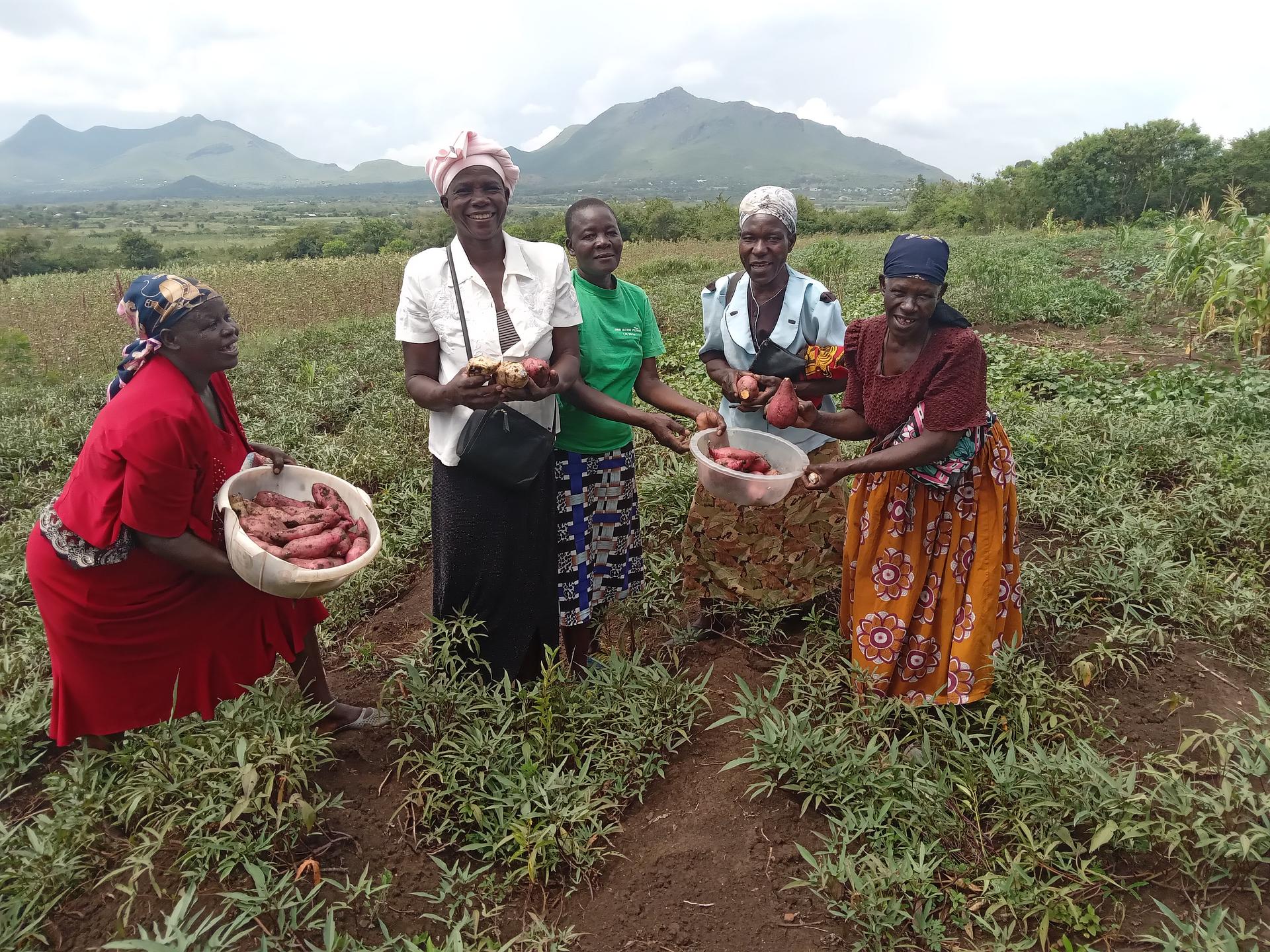
Growing of sweet potatoes as a drought tolerant perennial crop for economic and food security purposes.
Type of agroecological practice
1. The practice controls soil erosion since it is a cover crop and it sheds out most weeds on the farm.
2. Economic growth
3. Food security
4. Recycling of the crop residues after harvesting as manure on farm after they dry up to enhance soil health.
Implementing the practice
1. We plant the crop through vegetative propagation and some we plant the plant roots.
2. We make raised beds to prevent erosion of soil and make trenches for water passage during rains.
3. Since the area is prone to long dry seasons, we prefer the sweet potatoes as it is a climate resilient crop and this favors us with food in all seasons and and brings us income for other investments.
4. Recycling of the crop residues after harvesting as manure on farm after they dry up to enhance soil health.
Why you use and what you expect from this practice?
1. We practice sweet potatoes farming for economic benefits and as a measure of food security. The crop is climate resilient and does well in all seasons.
2. We expect to improve on our livelihoods through increased income and availability of food.
3. We also expect to expand the practice and add value to it since we plant different types of sweet potatoes that can be used in improved forms like flour.
Land size
Substitution of less ecological alternative
Details
1. No synthetic inputs used
2. Soil health is well maintained and improved
3. It is a climate smart practice since the crop is climate resilient
4. It is cost effective since the practice does not incur a lot of costs
5. Economically, it brings better income as it can be harvested repeatedly for a long time. It is perennial.