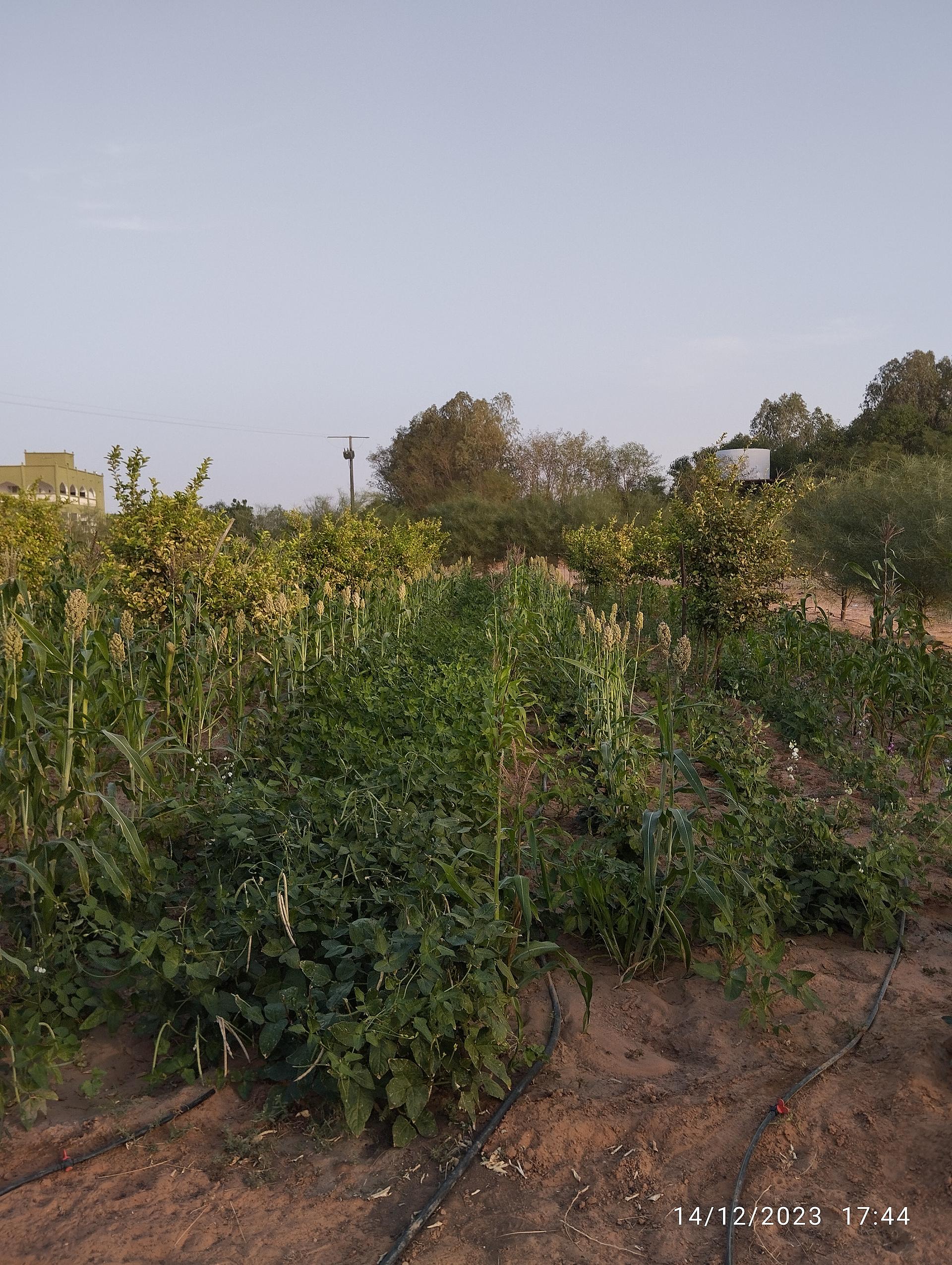

Where it is realized
Summary description of agroecological practice
Synecoculture is a sustainable method of cultivation which:
promotes associations between diverse plant species on a small agricultural space;
without the addition of chemical products;
only use the symbioses between plants and the intrinsic properties of cultivated species;
significantly increase productivity and farmers' incomes while restoring/increasing biodiversity.
Thanks to its socio-environmental and economic advantages, this new agroecological technology fills the gaps of the green revolution and adapts perfectly to any type of climate
Type of agroecological practice
Synecoculture is a form of polyculture of high density and great diversity.
It is a form of agroforestry which combines fruit trees and food production.
Implementing the practice
Synecoculture is involved in territorial research-action programs:
measuring the best phytosociological associations between the hundred species of a typical 0.1 ha exploitation;
preserving the very rich local variety of each species and their dissemination;
automating the supply of water for several exploitations in the most parcimonious way;
proposing the Worldwide Wellbeing web application “FOOD from field to plate” to orient Synecoculture products towards the wishes of the end consumer (as locally as possible)
Why you use and what you expect from this practice?
Synecoculture roadmap strongly contributes to at least 11 SDG in African Countries :
the fight against hunger (SDG 2) through high productivity;
the fight against poverty (SDG 1) through income diversification;
promoting health and well-being (SDG 3) through quality assurance of harvested foods;
the promotion of peace, synonymous with the promotion of peaceful societies open to sustainable development (SDG 16);
gender equality (SDG 5)
free trade and financial autonomy through economic development (SDG 8);
promote economic and ecological resilience (SDG 9);
establish sustainable production and consumption patterns (SDG 12);
the fight against climate change (SDG 13);
the preservation, protection and restoration of biodiversity (SDG 15).
Similarly, this new commitment to Synecoculture will lead to the opening of partnerships and the achievement of common objectives (SDG 17).
This 5-years Synecoculture roadmap also strongly contributes to the first 10-year implementation plan of 2063 Agenda CAADP (Comprehensive African Agriculture Development Program)
Substitution of less ecological alternative
Details
Use of chemical inputs, tillage