
Lieu de réalisation
Description sommaire de la pratique agroécologique
Crops for food security:
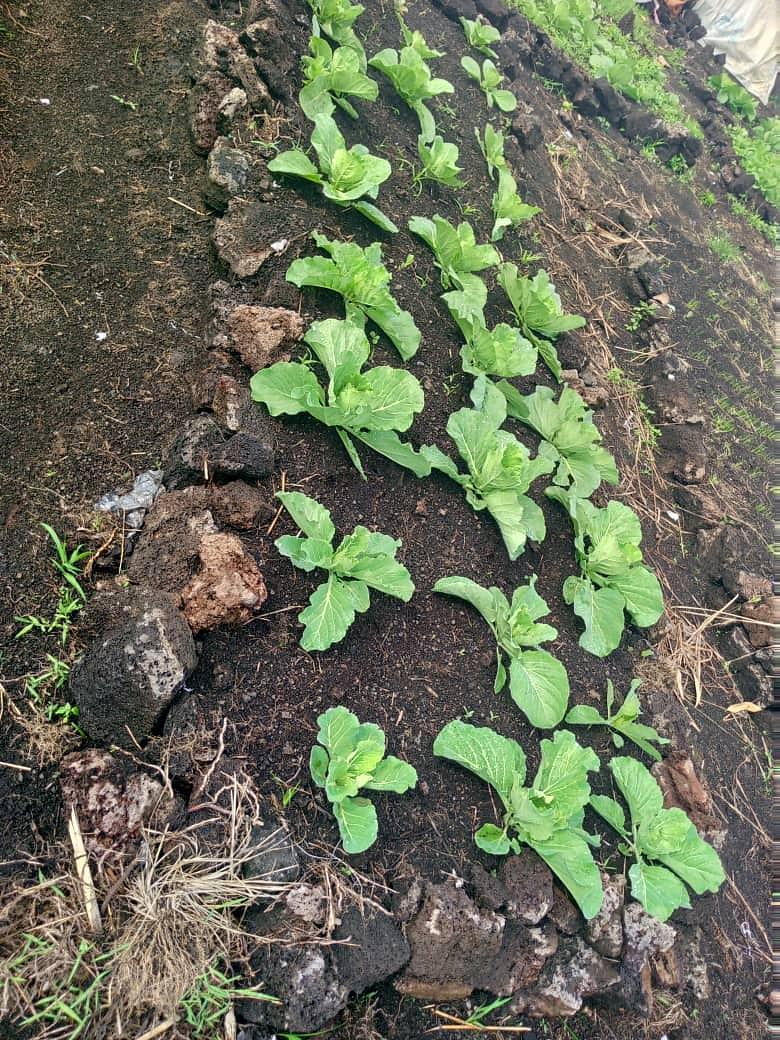
Maize and cabbage: We grow maize and cabbage, complementary crops that contribute to a healthy, balanced diet. This helps to combat hunger and poverty in your community.
Soil improvement and carbon sequestration:
Biochar: we use biochar to improve soil structure, water retention capacity and fertility. It also sequesters atmospheric carbon in the soil, helping to combat climate change.
Organic fertilisation:
Vermicomposting: we produce and use vermicompost, an organic fertiliser rich in nutrients and beneficial micro-organisms, to fertilise your crops. This reduces the use of chemical fertilisers and improves soil health.
Agroforestry:
Biopesticide and fruit trees: You distribute biopesticide and fruit trees to farmers for use in agroforestry. This practice makes it possible to diversify agricultural production, combat pests naturally and improve soil quality.
Type de pratique agroécologique
Soil improvement and carbon sequestration:
Agroforestry;
Organic fertilisation;
Fertilising cover crops;
Nettle purin and other biofertilisers:
Crop association.
Mise en œuvre de la pratique
Biochar:
We produce biochar from organic waste such as crop residues, firewood and manure.
Vermicomposting:
We have installed a vermicompost bin to transform organic waste into vermicompost.
Maize and lime crops:
We will plant maize and cabbage to improve soil fertility and plant nutrition.
Agroforestry:
We plant trees and shrubs in your fields to improve soil structure, fertility and water-holding capacity.
Pourquoi utilisez-vous cette pratique et qu'attendez-vous d'elle ?
Increasing crop production and protecting the environment
Superficie du terrain
Substitution d'une alternative moins écologique
Détails
Putting plastic waste to good use in urban gardening