Fertilizer Independence through Organic Briquettes
JAMTANI-Indonesia Peasant Community Organization
 364
364
Where it is realized
Summary description of agroecological practice
Organic briquette fertilizer is a solution for rice flood-prone areas as a climate change impacts such as flooding caused by high intensity rain. On the other hand, the use of organic briquette fertilizer can reduce the release of emissions caused by burning straw and unprocessed livestock manure.
Type of agroecological practice
Farmers led research on Organic briquette fertilizer
Implementing the practice
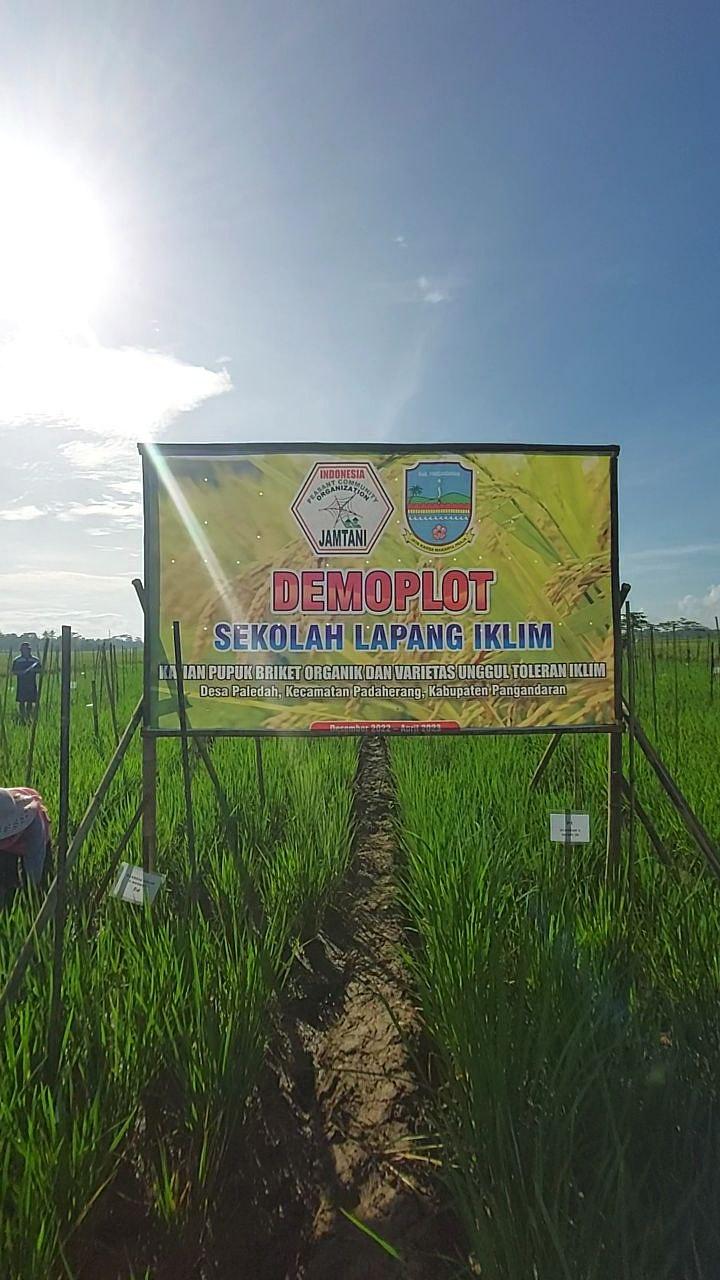
The briquette fertilizer is a fertilization solution in flood-prone areas to increase production. Applying conventional fertilizer (powder) to flooded land is not effective and becomes a problem because the fertilizer will be washed away or lost. Briquette fertilizer with a size of 25-50 grams per briquette is an effective solution because fertilizer can be easily immersed with a dose of 1-2 briquettes per 4 plants. The results of the MT 2021 DEMOPLOT in the flood season in Paledah Village, Padaherang District, Pangandaran Regency, the application of briquette fertilizer was able to produce 6.2 tons of grain / ha (an increase of 27 %) which usually only harvested 3-4 tons / ha. Therefore, the use of organic briquette fertilizers made from local raw materials (compost, Azolla, husk charcoal, kohe, dolomite and other agricultural wastes) is expected to be a solution for providing fertilizers independently, developing rural fertilizer industries, encouraging climate-resilient agriculture and increasing productivity and income of farmers in flood-prone areas.
Why you use and what you expect from this practice?
Alternative organic fertilizers offered to farmers must have values that consider aspects such as efficient in application, prices that are not more expensive than inorganic fertilizers, have complete nutrient content according to plant needs and effective by making a real contribution to increasing production. The mechanism for producing organic briquette fertilizer can be through a rural fertilizer factory managed by the Association of Farmer Groups (GAPOKTAN), Agricultural Production Facility Cooperatives (KOPTAN) or Village-Owned Enterprises (BUMDes). From the local government side, it can issue policies/instructions that encourage smooth achievement of goals, such as stopping straw burning, communally managed livestock assistance, organic farming, assistance for organic fertilizer production facilities and encouraging the realization of equitable marketing of organic products.
Land size
Substitution of less ecological alternative
Details
the application of briquette fertilizer was able to produce 6.2 tons of grain / ha (an increase of 27 %) which usually only harvested 3-4 tons / ha