
Knowledge source
Indigenous knowledge
Local knowledge
Personal experimentation
Details
She has produced innovative approaches such as biological pesticide and soil bank that can help the soil health of the farm.
Biological control for diseases and pests: After she ban using inorganic materials including pesticide and insecticide, she has developed her own method to develop biological pesticide or insecticide. She started to use leaves of true neem trees and she mixed this leaves with Urine of oxen. The mixture will be fermented for 15 days after that the liquid could be applied as an Integrated Pest Management (IPM). Moreover, the leaf of Desmodium is also used for similar purposes. Desmodium was introduced in 2008 as livestock feed by Relief Society of Tigray (REST), however, Haregu was able to use this grass to eliminate Striga and she has presented about practical push-pull factor in a conference and she remained to be known for using Desmodium as feed, seed, IPM and more.
Investment on the improvement of soil ecosystem (soil bank): In order to improve the soil ecosystems, she has replaced the top soil with the other fertile soil from another place. She has also performed a number of activities to enhance the health of the soil or to combat the soil related problem that are common in the area. These problems include soil salinity, rocky landscape, Striga infestation and low organic matter.
Knowledge timing
Details
The farm was established in 2005 at that time she was practicing irrigation on 1.5 hectares and now she is practicing on 12 hectares of land. During the first five years, she was able to engage on cash-oriented vegetables such as tomato, onion, paper, and she found out that the soil was not anymore fertile to support future agricultural productivity with the same or improved productivity even with the use of inorganic fertilizer.
Uptake motivation
Haregu, among other women farmer in Tigray was basing her livelihoods on small-scale agriculture and salary of her husband. Haregu, similar to the other females who live in the rural areas of Tigray, was confronted with a challenging life. The reason that her husband is employed and became the only source of income, and being the salary not enough to support the family, enable her to magnify her dependence greatly. This has challenged her to find other livelihood options that can enable her to support sustainable livelihoods for her family.
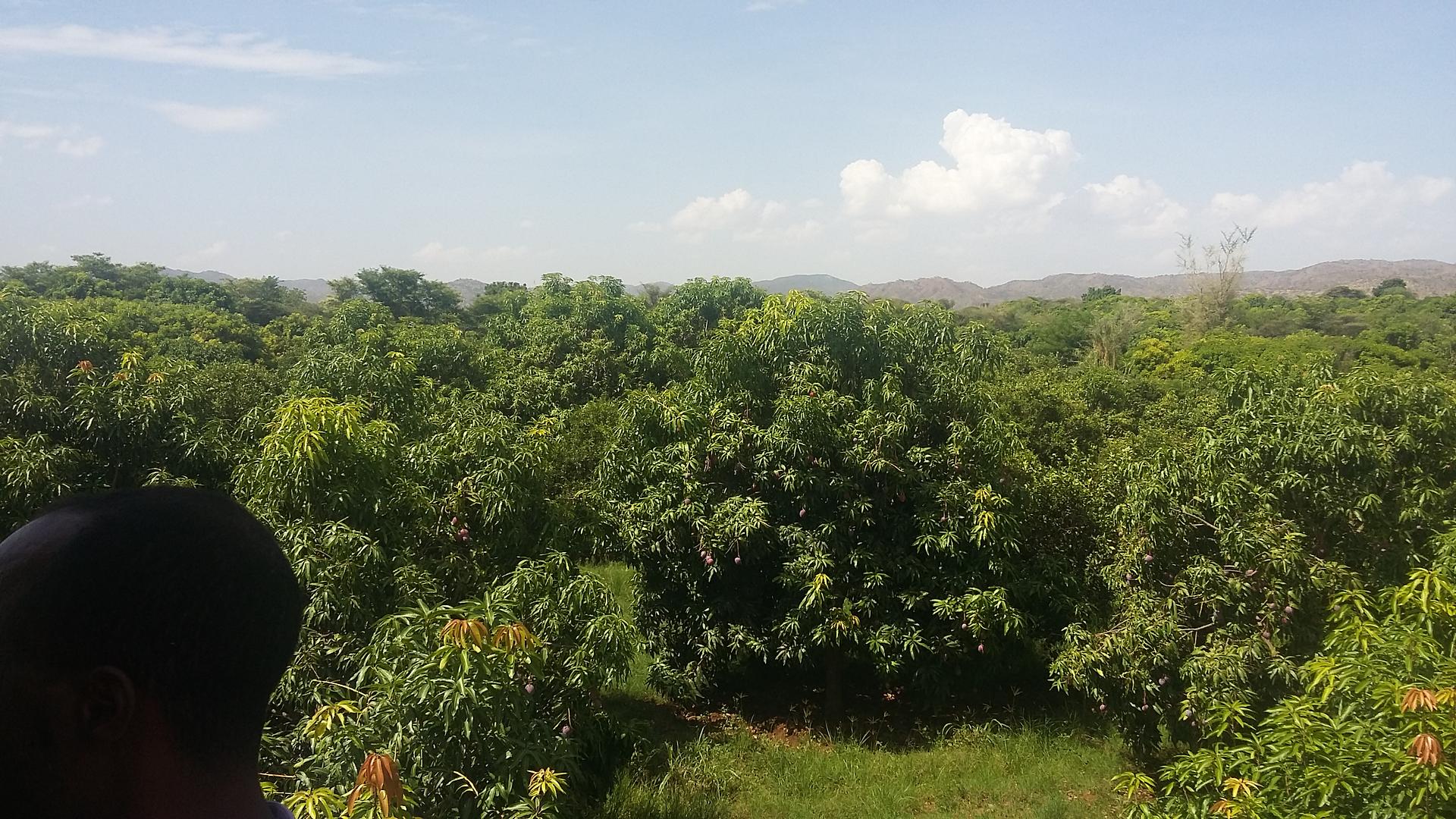
One day she started to think that “this type of livelihood is from hand to mouth,” and she wanted to make paradigm shift on her livelihood and she started to list a number of livelihood options that she can engage with and finally something came to her mind, “Haregu? Can you see the degraded area over there? She replied, yes, yes! If you are able to work not only hard but also systematically, the area will be productive for you.” This has immediately changed her mind! Nevertheless, the idea that originated from her mind took her sometime to think if it is doable or not. However, the mind that initiated this noble idea also made another breakthrough. She has managed to clear the tremendous stones in the farm. She hired a number of students to clear stones for her; in addition to her involvement in the stone clearing. This yielded a win-win situation, in that the land is rehabilitated, fruits grown and the livelihoods of many individuals improved.
Knowledge products
https://agroforestrynetwork.org/swedish-press-highlights-agroforestry-for-poverty-alleviation-and-climate-change-mitigation/
https://www.organicwithoutboundaries.bio/2022/08/15/a-young-woman-who-transformed-stones-into-fruits-in-the-lowlands-of-tigray-northern-ethiopia/
https://thewaterchannel.tv/thewaterblog/an-oasis-of-hope/