
General performance
Details
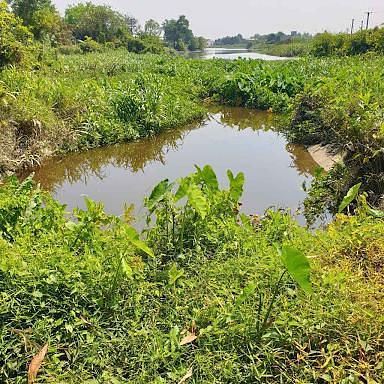
"The Pongamia Resilient Corridors project demonstrates high multi-dimensional performance:
Ecological Performance: Proven high survival rate in saline and acidic soils (up to 15-20 ppt). Effectively functions as a 'Living Shield' against riverbank erosion, reducing the need for costly concrete infrastructure.
Economic Performance: Transforms idle 'marginal lands' into high-value assets. Provides a diversified income stream for farmers through intercropping (short-term), oil-seed sales (long-term), and Carbon Credits (ongoing).
Operational Performance: Achieves ultra-low carbon footprint through the 'Linear Bio-Forest' model, leveraging natural canal networks for zero-cost, water-based logistics.
Strategic Impact: Directly supports Vietnam’s Net Zero 2050 commitment while creating a scalable, resilient biofuel supply chain for the global Sustainable Aviation Fuel (SAF) market."
Unintended positive side effects of practice
Details
Zero-Emission Navigation: The "Linear Biofuel Forest" naturally cleans the canal water, and using local boats for seed collection creates a carbon-neutral logistics model that could be replicated for other local crops.
Micro-climate Regulation: The dense canopy of Pongamia along the Saigon River significantly reduces the "Urban Heat Island" effect, making the waterfront much cooler for pedestrians and local residents.
Public Awareness & Tourism: The vibrant foliage of the trees has turned the canal banks into a scenic attraction, potentially boosting local eco-tourism and raising community awareness about climate change and Net Zero goals.
Natural Pest Control: The project has seen an increase in local bird and beneficial insect populations, providing natural pest control for the surrounding rice and vegetable fields.
Unintended negative side effect of practice
Details
Debris from Leaf Fall: The dense foliage of Pongamia results in seasonal leaf litter, which could temporarily clog narrow canal drainage if not managed.
Mitigation: Implementing a community-led composting system to turn leaf litter into organic mulch for the soil.
Canopy Shade on Lower Crops: As the trees mature along the riverbanks, their broad canopy might shade out some smaller sun-loving native plants or intercropped species.
Mitigation: Strategic canopy pruning (lifting) to ensure balanced sunlight for both the Pongamia and the understory vegetation.
Seed Toxicity: Pongamia seeds contain natural compounds that are inedible for humans and livestock if consumed raw.
Mitigation: Strict harvesting protocols and community education to ensure seeds are strictly used for biofuel/oil processing and kept away from children/animals.
Knowledge and skills required for practice
Details
Elite Genetics & Propagation: Understanding Terviva’s high-yield, non-GMO Pongamia varieties and specialized grafting techniques to ensure consistent oil production.
Bio-engineering Principles: Knowledge of structural planting and root system management to effectively stabilize riverbanks and prevent soil erosion.
Regenerative Agroforestry: Skills in intercropping management (nitrogen-fixing synergy) and soil health monitoring using agroecological indicators.
Circular Logistics Management: Skills in organizing water-based seed collection networks and managing small-scale farmer cooperatives for efficient harvest.
Carbon Market Literacy: Understanding the protocols for carbon sequestration measurement to access international voluntary carbon markets.
Labour required for practice
Details
Establishment Phase (High Demand): Initial labor is needed for land preparation along canal banks and high-density planting of Pongamia saplings. This phase engages local farmer cooperatives for digging, staking, and initial irrigation.
Maintenance Phase (Low to Moderate): Once established, Pongamia is a "low-maintenance" tree. Labor is primarily required for seasonal "Canopy Lifting" (pruning) to maintain waterway navigation and monitoring soil health.
Harvesting & Logistics (Seasonal Peak): Harvest requires a specialized labor force for seed collection using local boats. This provides flexible, inclusive income opportunities for local women and elderly residents who can participate in seed sorting and drying.
Project Coordination (Continuous): Skilled labor for data collection, carbon sequestration monitoring, and coordinating between Terviva's technical team and local farmers.
Cost associated with practice
Details
Establishment Costs (Capex): Initial investment includes high-yield Pongamia saplings from Terviva, land preparation along canal banks, and initial labor for planting and staking.
Bio-engineering vs. Concrete: Compared to traditional concrete embankments, our "Living Shield" costs 60-80% less to establish and maintains itself through natural growth.
Operational Costs (Opex): Low long-term maintenance. Costs include seasonal pruning (canopy lifting), soil monitoring, and seed collection logistics using local boats.
Revenue Offsets: Implementation costs are significantly offset by Carbon Credit revenues and high-value seed sales for Biofuel (SAF)
Social Investment: Costs also involve community training for farmer cooperatives to ensure safe harvesting and high-quality post-harvest processing.
Does it work in degraded environments?
Details
Yes, absolutely. Pongamia pinnata is a true 'Ecosystem Hero' for degraded landscapes. It thrives in high-salinity environments (up to 15-20 ppt) and acidic sulfate soils common in Southern Vietnam.
How it works:
Nitrogen Fixation: It naturally restores soil fertility by fixing atmospheric nitrogen through its root nodules.
Deep Root System: Its taproot can reach up to 10 meters deep, allowing it to survive extreme droughts and stabilize shifting riverbanks.
Phytoremediation: It helps clean contaminated soils and tolerates high temperatures (up to 50°C), making it the ideal candidate for restoring 'marginal lands' that are unsuitable for food crops."
Does it help restore land?
Climate change vulnerability effects
Details
"Yes, Pongamia is a 'Pioneer Species' for land restoration. It actively heals degraded environments through three natural mechanisms:
Nitrogen Fixation: As a legume, it hosts symbiotic bacteria in its roots that convert atmospheric nitrogen into soil nutrients, naturally fertilizing exhausted 'marginal lands' without chemical inputs.
Soil Structure Reinforcement: Its massive, deep taproot and dense lateral root matrix act as a 'biological anchor,' preventing erosion on riverbanks and improving soil aeration and water retention.
Organic Matter Cycle: Constant leaf litter creates a rich layer of organic mulch, protecting the topsoil from extreme heat (up to 50°C) and gradually rebuilding the humus layer in sandy or depleted soils."