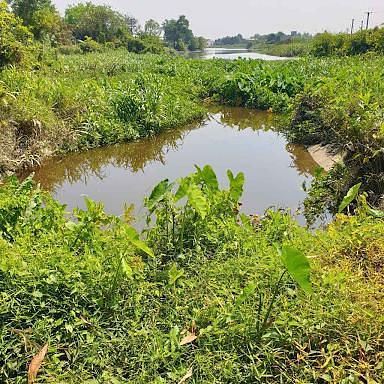

Where it is realized
Summary description of agroecological practice
Linear Energy Forest Model: Utilizing abandoned canal and waterway corridor land to cultivate trees for seed production of biofuel.
Zero-Cost Waterway Logistics: Innovative use of waterways and boats for harvesting and transporting seeds, minimizing operating costs.
Integrated Carbon Credits: Introducing a CO2 absorption model at the commune level for the first time to access revenue from the international carbon market, generating funds for maintaining green infrastructure.
We are open for global partnerships to scale this nature-based solution.
Type of agroecological practice
"Regenerative Agroforestry & Bio-engineering".
Agroforestry: Integrating native Pongamia pinnata with local intercropping (beans, peanuts) to enhance soil nitrogen and provide multi-layer income.
Riparian Buffers: Planting "Linear Biofuel Forests" along canals to protect water quality and create natural habitats.
Bio-engineering: Using the dense root matrix of Pongamia as a "Living Shield" to stabilize riverbanks and prevent erosion without concrete.
Circular Economy: Leveraging natural water-based logistics for zero-carbon seed transport and using seed cake as organic fertilizer.
Implementing the practice
"Our implementation follows a 3-phase strategic roadmap:
1. Establishment & Bio-engineering: We identify vulnerable riverbanks and canal corridors to plant native Pongamia pinnata. High-density planting is used to quickly establish a 'Living Root Matrix' for erosion control.
2. Agroforestry Integration: During the first 3-5 years, we implement intercropping models (legumes, peanuts) between the Pongamia rows. This improves soil nitrogen and provides immediate income for local farmer cooperatives.
3. Circular Logistics & Harvest: We leverage the natural water flow of the canals for zero-carbon seed transport. Harvested seeds are processed for high-value Omega-9 oil and biofuel feedstock (SAF), while seed cake is recycled as organic fertilizer."
Why you use and what you expect from this practice?
Why we use this practice:
"We chose Regenerative Agroforestry with native Pongamia pinnata because it is a 'triple-win' solution for Southern Vietnam. Unlike concrete embankments, Pongamia's root matrix provides a natural, self-healing shield against the severe riverbank erosion and salinity intrusion we face. It turns idle, degraded 'marginal lands' along our canals into productive assets without competing with food crops."
What we expect from this practice:
"Our expectation is to build a Circular Bio-economy that achieves three main goals:
1. Climate Resilience: Protecting thousands of kilometers of waterways and supporting Vietnam's Net Zero 2050 commitment through massive carbon sequestration.
2. Economic Prosperity: Creating a stable, long-term income for local farmers through seed harvesting for Sustainable Aviation Fuel (SAF) and carbon credits.
3. Urban Cooling: Transforming the Saigon River into a lush, green corridor that enhances biodiversity and improves the quality of life for millions of citizens."