
Onde é realizado
Descrição resumida da prática agroecológica
Regenerative Riparian Agroforestry is a climate-resilient, nature-based solution designed for canal networks and degraded riverbanks
. The practice integrates two key nitrogen-fixing legume species to restore soil health and prevent erosion without chemical fertilizers
:
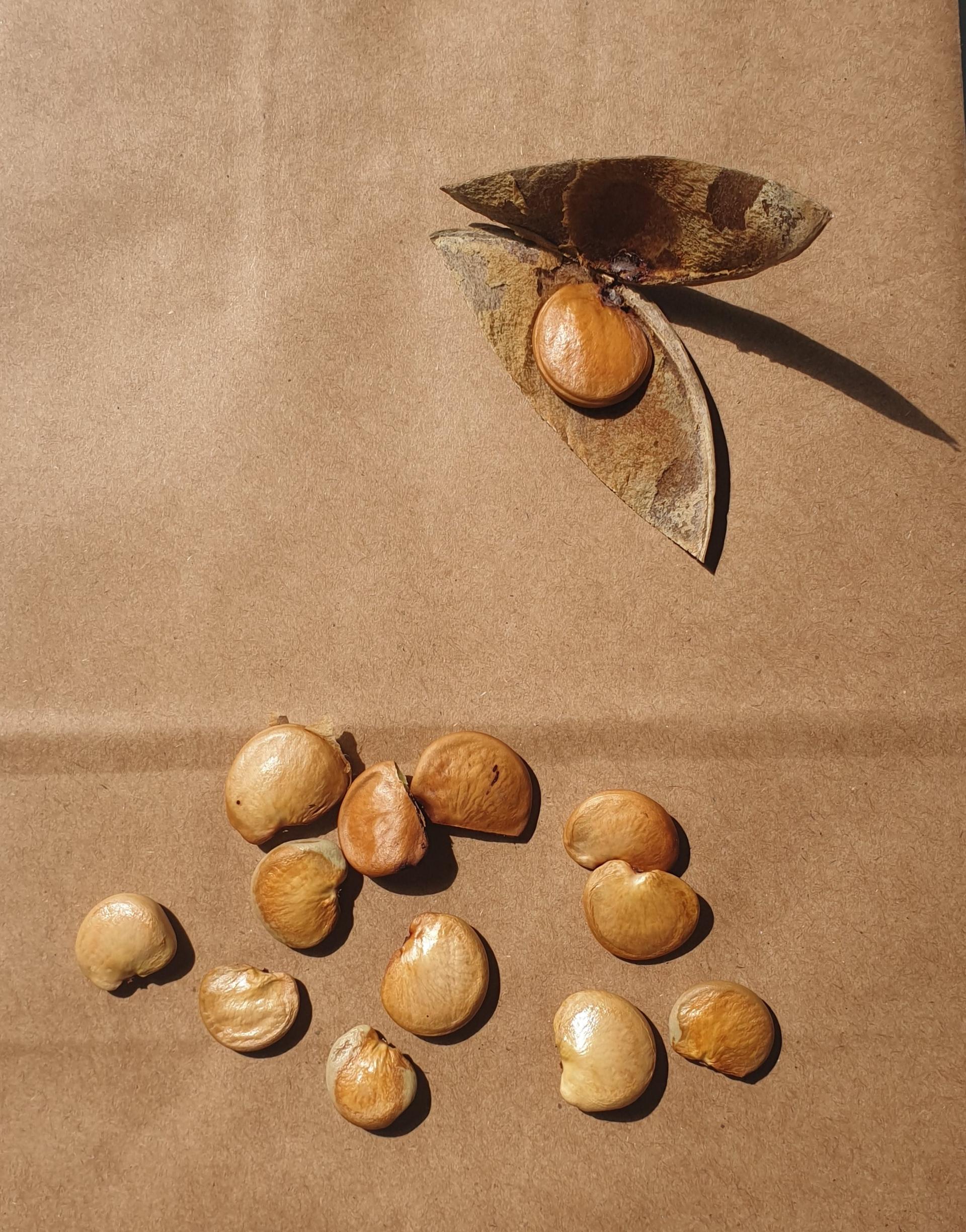
Pongamia pinnata (Sến/Dự): A long-term perennial tree living up to a century
, featuring a massive root system that penetrates up to 10 meters deep
. It serves as a mechanical "Living Shield" to stabilize riverbanks, prevent landslides, and block salinity intrusion
.
Moringa oleifera (Chùm ngây): A fast-growing companion crop that enriches the soil and can be harvested within 8 months for nutrient-rich food, animal fodder, and medicine
.
This agroecological model delivers circular, multi-tiered benefits
. In the short term, Moringa provides immediate nutrition and income for local smallholders
. From the third year, grafted Pongamia produces seeds year-round for sustainable local biofuel (biodiesel)
, while its leaves are used for biogas and organic fertilizer
. After 10 years, Moringa can be harvested for paper pulp and medicinal roots
, allowing the fully mature Pongamia trees to provide permanent ecological protection, support biodiversity, and contribute to Net Zero goals
Tipo de prática agroecológica
Multipurpose riparian agroforestry and bio-engineered soil erosion control. This practice integrates deep-rooted perennial trees with fast-growing companion crops along waterways to stabilize riverbanks, prevent salinity intrusion, and provide circular livelihoods.
Implementando a prática
Phase 1: Preparation & Nursery Development
Community Mobilization & Financial Planning:
Organize local smallholder farmers into collectives or cooperatives to ensure "empowered participation" and community-led decision-making right from the project’s inception
.
Ensure that funding is allocated appropriately—getting the right capital to the right place at the right time
.
Nursery Inoculation:
Cultivate Pongamia pinnata (Đậu dầu) seedlings in a nursery.
Apply Arbuscular Mycorrhiza (AM) mycorrhizal fungi to the root systems during the nursery stage. This bio-treatment significantly enhances early-stage seedling growth, root development, and subsequent soil rehabilitation capabilities
.
Propagation Selection:
For Pongamia, prioritize propagating via grafted branches (chiết cành) rather than growing from seeds. Grafted trees will begin bearing fruit and seeds year-round starting from their third year, significantly shortening the timeline to generate economic returns
.
Phase 2: Site Layout & Planting (Establishing the "Living Shield")
Spatial Design:
Plant the trees linearly along canal networks and riverbanks to create a robust "Living Shield" (Lá chắn sống)
.
Co-plant (trồng chung) both Pongamia pinnata (Đậu dầu) and Moringa oleifera (Chùm ngây/Thần diệu) together on the same land area
.
Ecological Synergy:
Since both species belong to the legume family (họ đậu), they naturally fix nitrogen to enrich and rehabilitate the degraded riverbank soil
. They require minimal chemical fertilizer and maintenance
.
As they grow, Pongamia's massive root system will penetrate up to 10 meters deep into the ground
. This provides heavy mechanical stabilization to hold the soil, control erosion, and mitigate flooding and salinity intrusion
.
Phase 3: Early-Stage Management & Harvesting (Years 1 to 9)
Moringa Management (Months 8+):
Moringa grows exceptionally fast (about 20 times the average tree rate)
. You can begin harvesting its leaves, flowers, tubers, and seeds just 8 months after planting
.
Keep the Moringa trees pruned low like a vegetable crop
. Even though they can naturally grow over 10 meters tall, keeping them low makes harvesting leaves for nutritional food, tea, or young branches for animal fodder much easier
.
Pongamia Harvesting (Years 3+):
By the third year, the grafted Pongamia trees will start yielding seeds year-round
.
Harvest these seeds to extract biodiesel (which offers a higher biofuel yield than Jatropha)
. Tarp/leaf-fall can be utilized to produce biogas and premium organic fertilizer
.
Phase 4: Long-Term Transition (Year 10 and Beyond)
Thinning the Canopy:
Around Year 10, the Pongamia trees will reach full maturity and achieve optimal ecological and energy-producing yields
.
At this point, begin gradually thinning out (đốn dần) the Moringa trees to avoid overcrowding and resource competition
.
Final Biomass Liquidations:
Sell the logged Moringa wood as raw material for high-grade paper pulp, and harvest its roots to be processed for medicinal purposes
.
Permanent Riparian Protection:
With Moringa harvested, the long-lived Pongamia trees (which can live up to a century with lush green canopies)
will completely take over the area. They will remain as a permanent barrier protecting the riverbanks, enhancing local biodiversity, and securing steady biofuel income for the community
Por que você usa e o que você espera dessa prática?
An Immediate "Living Shield" (Lá chắn sống) against Natural Disasters:
Erosion and Landslide Control: Pongamia's massive, dense root system grows up to 10 meters deep
. This acts as a powerful mechanical anchor, stabilizing riverbanks, preventing landslides, and cutting down siltation
.
Salinity Barrier: Planting these trees along canal and river networks creates a robust biological shield that blocks saltwater intrusion into valuable inland agricultural soils
.
A Phased, Highly Lucrative Circular Economy for Smallholders:
Short-term (Months 8+): Moringa grows incredibly fast (up to 20 times the average rate)
. Nông dân can harvest its highly nutritious leaves, flowers, tubers, and seeds in just 8 months
. The leaves are exceptionally rich in proteins, minerals, and vitamins (A, C, B1, B2)
, providing an immediate tool to combat "hidden hunger" (micronutrient deficiencies) in local populations
.
Medium-term (Years 3+): Properly grafted Pongamia trees start yielding seeds year-round by the third year
. These seeds are pressed to extract biodiesel (yielding more biofuel than Jatropha)
, while the fallen leaves generate biogas and premium organic fertilizer
.
Long-term (Years 10+): Once the Pongamia trees fully mature, farmers can gradually thin out the Moringa trees and sell the wood for high-grade paper pulp and the roots for medicine
. This provides a massive final cash injection, leaving the long-lived Pongamia trees (which live up to a century) to permanently protect the riverbanks
.
Global Climate Impact and Food Sovereignty: This self-sustaining model contributes directly to reducing global CO2 emissions
and restoring degraded landscapes
. Additionally, by producing energy and rich nutrition locally, it helps smallholder farmers achieve true food sovereignty and economic independence from corporate monopolies