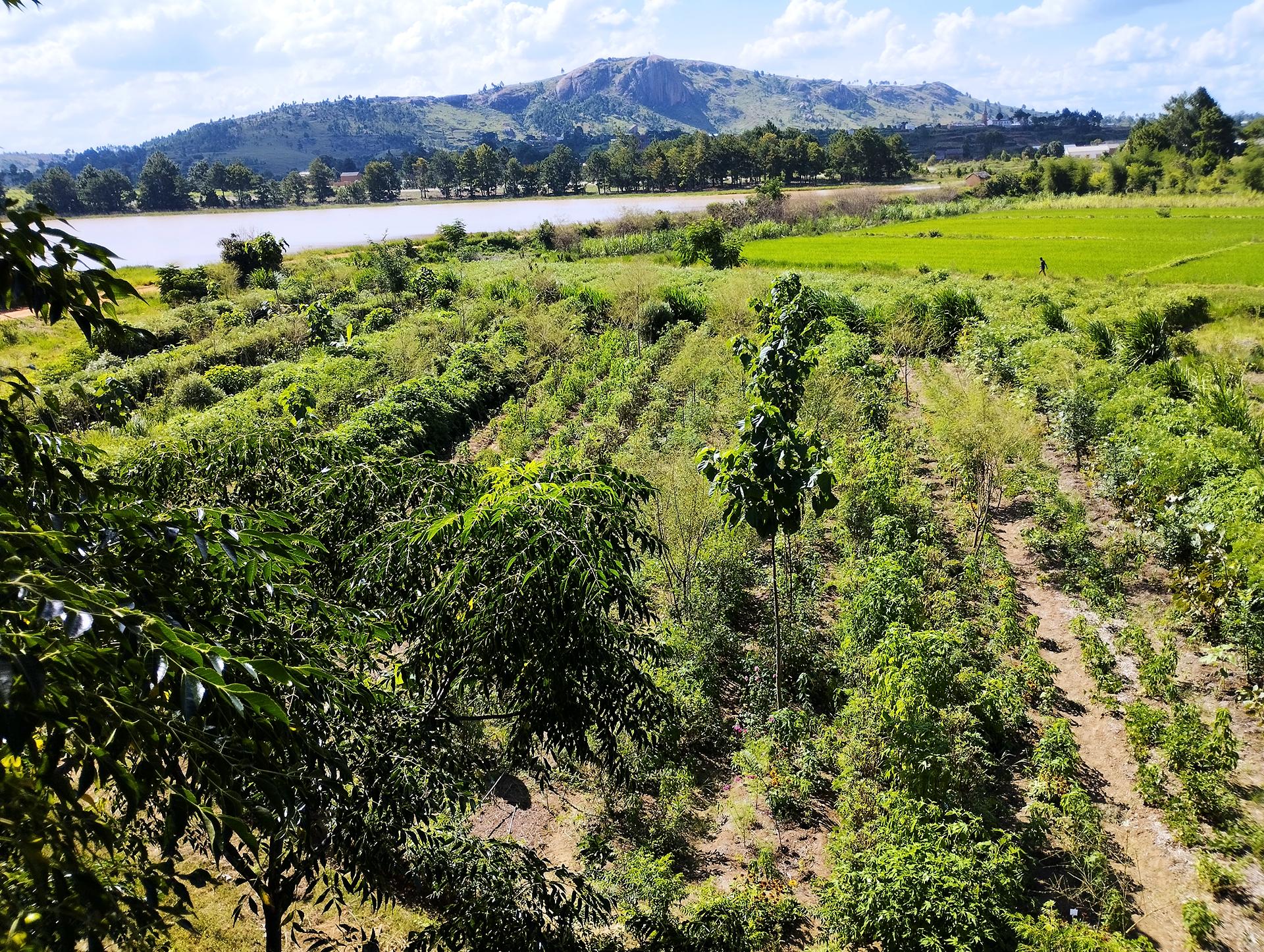

General performance
Details
If in the first years the results were not glorious, they nevertheless improve each year: I only produced 20m3 of compost 3 years ago, then 60m3, then 96m3. My harvests followed, becoming more and more productive. Likewise, my soil is transformed, my red or yellow clay becomes brown.
Finally, I almost no longer need to treat: an ecosystem has now been established, with natural predators.
My living hedges produce fertilizer, which returns to the ground. My soil is enriched, my harvests increase, my hedges also benefit in turn from the improvement of my soil, and become more and more productive, then producing more and more biomass for compost. And so on, it’s a virtuous circle that I have put in place.
Unintended positive side effects of practice
Details
I hadn't expected that the insect pests would eventually disappear.
Unintended negative side effect of practice
Details
Every year new problems appear, and every year I have to find new solutions. The system is therefore improving little by little. It's the arms race, vegetable garden version.
Knowledge and skills required for practice
Labour required for practice
Details
I have 4 people for 1,5ha
Cost associated with practice
Details
my costs are higher because I select and sort my seeds, which is not normally done in market gardening. So I have a little more labor than in traditional market gardening.
However, I no longer purchase any inputs, which relieves me of many costs.
Does it work in degraded environments?
Details
Of course! The plants that form the basis of my agronomic system are "weeds" that grow everywhere. My system is therefore extremely flexible.
Climate change vulnerability effects
Details
Yes, thanks to the multitude of trees that grow and enrich the soil with organic matter all year round.
In addition, the quantity of trees on my plots allows me to capture ambient humidity from the air in winter, which helps me enormously with watering.
Time requirements
Details
It begins to be effectiv after 4 months only