
Where it is realized
Summary description of agroecological practice
Nile Interconsults company Ltd is a climate startup. We use a production method replaces conventional agriculture. Our objective is to reverse climate change with sustainable agroforestry. Nile Interconsults focuses on making carbon positive food products for conscious consumers. This makes the food consumers able to be carbon positive by eating foods produced in the right way, and the farmers able to build food-forests all over the planet for profit and thus, together with the global green consumer become the driving force for a climate solution. We design and build forests in emerging markets with smallholder and subsistence farmers. Our company produces and trades agroforestry products working together with local women farming groups and cooperatives.
Type of agroecological practice
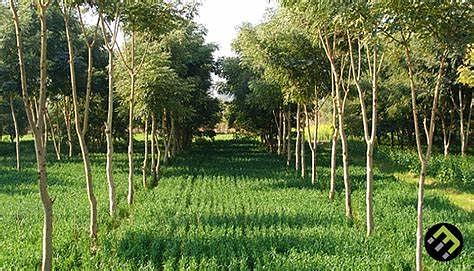
We are commercialising an agricultural production method known as agroforestry that is mainly used globally to prevent desertification in reforestation projects. The principle of agroforestry entails planting forests for protection of different crops that grow under the protection of the trees, and thus creating synergy effects. This is achieved by planting crops together with different fast-growing trees, a process which helps fertilize the soil, thus providing crops with the nutrients they need to aid their growth.
Within agroforestry we are drawing specifically on permaculture and syntropy principles. These methods are characterized by instead of heavy mechanical inputs as in normal conventional farming, it is mainly hand labour by farmer groups, and by using special zone designs according to dominant winds and solar patterns to increase energy efficiency in the ecosystem and logistics with small vehicles over short distances.
The forests provide safety for the cropping plants under the trees in the form of shade, and adds moisture in the root zone of the cash crops, as well as providing nutrient exchange from large trees to small crops.
These agroforestry systems ensure safety of the crops survival and yield from extreme weather events such as heatwaves, drought, floods, torrential rains and so on. Therefore, making the production resilient to existing and future global climate change, resulting in a higher consistency of product quality and quantity for market volume. The fertile soils after a few years create a higher yield and more stable production and makes for permanently secure and predictable supply.
Implementing the practice
We use sustainable climate resilient production methods that secures harvest in extreme weather conditions due to climate change. We facilitate specialty seeds, and tree seedlings to amend the soils for the farmers, and we bring materials for production and secure post-harvest of their crops. We market the products to the high-end conscious consumers. We are producing only with climate resilient methods, using sustainable agroforestry giving us an advantage over traditional agricultural methods in harvest productivity as well as keeping the production price stable. This method is carbon positive and lowers the footprint of our customers the more they buy from us.
Why you use and what you expect from this practice?
Carbon Sequestration. The enhanced production capacity and sustainability is due to the forest effect of increasing the carbon in the soil layer, as the local rainfall is absorbed and makes the forest alive for and smart soil practices provide the forest with what it needs. This solves a multitude of serious global problems. Nile Interconsults methods on a mass scale act as a significant carbon sink from the growing forests, revitalize soils and water levels. Initially it yields food and creates production and processing jobs in rural areas too dry or difficult for normal practices, empowers impoverished farmers and lastly provides more food to the global market. Therefore, it is part of the positive long-term solution to the global environmental challenges, both for biodiversity, animals as well as for human habitats, such as providing drinking water and food security for urban areas, resolving issues locally and creating stability regionally and geo-politically.
Land size
Substitution of less ecological alternative
Details
Polyculture is the practice of planting many different species in the same field and it has long-term benefits as the name permaculture would suggest. In the natural world, fields of only one species do not exist. A more diverse ecosystem naturally occurs where different species benefit from each other. Nile Interconsults model operates in a more natural way, where the species sustain themselves and do not need inputs such as fertilizer or additional water which isn’t supplied by weather once they’ve matured. The practice of polyculture has many benefits including resisting the global problem of desertification.